

What is Agile Software Development?
Agile development is an approach that is a combination of iterative and incremental sequences with a focus on process adaptability and customer satisfaction via a rapid delivery of the working product.
Unlike the more traditional waterfall model previously used in development, where each step is completed sequentially, agile promotes an idea of overlapping phases.
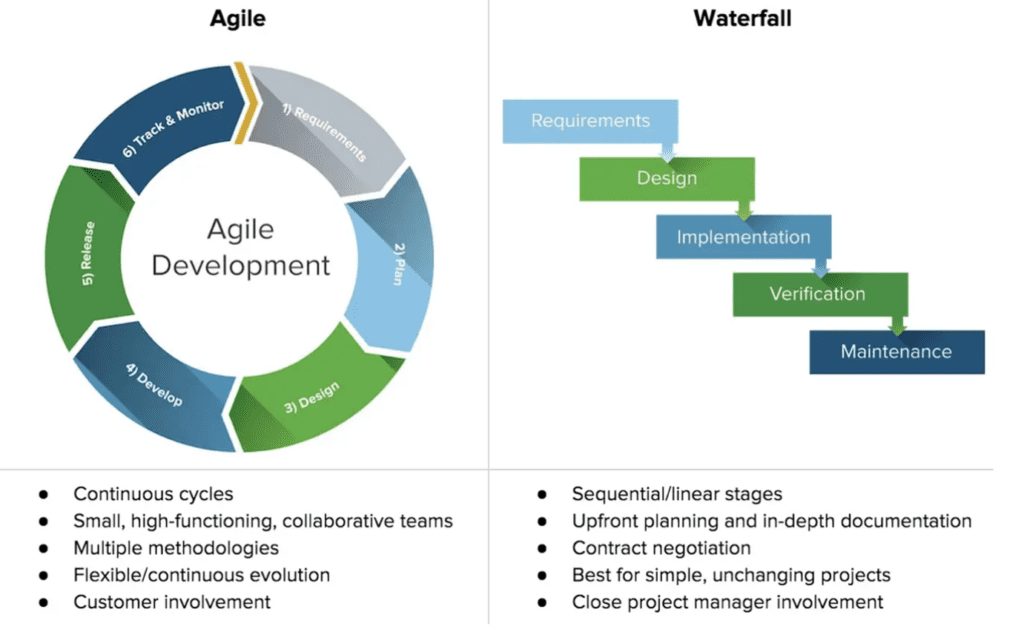
Agile development uses iterative development with incremental releases. Let’s take a look first at what incremental and iterative development methods are.
Iterative process
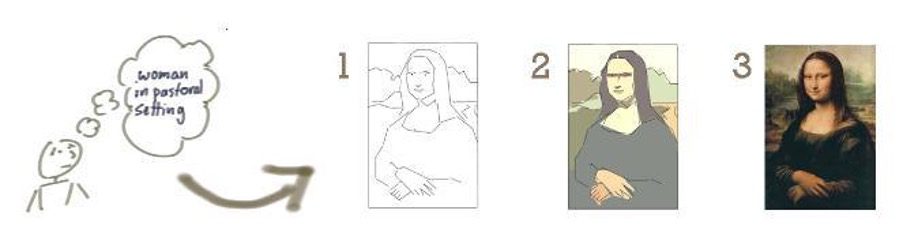
An iterative process makes progress through successive refinement. The development team develops a first version of the system, knowing that some parts will not be finished. They then iteratively enhance those parts until the product is at the standard they want/need. With each iteration, customer feedback is used and the software is improved by adding more detail.
Let’s take an example of the image below, where the customer isn’t clear and asked the painter to paint a woman in a pastoral setting. The artist will create a sketch, then take the customer feedback to understand and paint the correct picture through multiple iterations:
Incremental process
This involves delivering components of the software in parts. Each increment represents a complete subset of the functionality and is fully coded and tested. If we use the picture example from above again but imagine this time the artist paints it with an incremental process. This time, he knows he needs to paint a picture of the Mona Lisa, and incrementally builds separate parts of the image until it is done.

Agile as an incremental and iterative method
Agile is iterative because it plans for the work of one iterative to be improved upon in subsequent iterations. However, it is also incremental because completed work is delivered throughout the project.
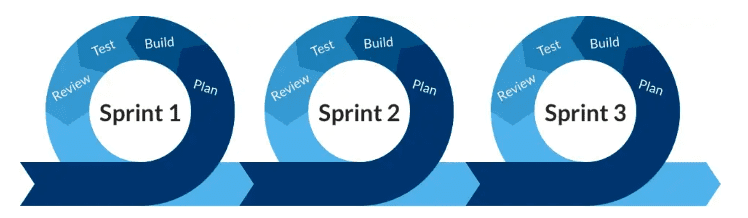
During a development “iteration”, or sprint, where several features are built, some may be iterating to improve, modify or remove existing functionality, while others are incrementally adding new functionality.
Check out some of our upcoming articles on the different Agile terms and features!
Interested in our courses?
Interested in computer engineering? Find out more about all the computer engineering courses we have available by clicking here.
Diploma in Computer Engineering
Diploma in Artificial Intelligence
Alternatively, you can view all our online engineering courses here.
Recent Posts
Types of Aircraft Drag Explained: Induced, Profile and Interference Drag
Types of Aircraft Drag Explained: Induced, Profile and Interference Drag An aircraft experiences several forms of aerodynamic drag at the same time. Some result from generating lift, some arise as air flows over the aircraft’s surfaces, and others are created when airflow around neighbouring components interacts. For a conventional aircraft in subsonic flight, total drag […]
Induced Drag Explained: Why Flying Slower Can Increase Drag
Induced Drag Explained: Why Flying Slower Can Increase Drag Why can an aircraft experience more drag when it flies more slowly? We usually associate greater speed with greater air resistance, but a wing must also generate enough lift to support the aircraft. Induced drag is the drag associated with producing lift on a finite-span wing. […]
Laminar vs Turbulent Boundary Layers: Why Airflow Separates from Aircraft Wings
Laminar vs Turbulent Boundary Layers: Why Airflow Separates from Aircraft Wings Airflow around an aircraft wing is often shown as smooth streamlines passing neatly over the aerofoil. In reality, the thin layer of air immediately next to the wing surface behaves very differently from the undisturbed airflow further away. This region is called the boundary […]