

From Pressure to Position: How Altitude Is Measured in Flight
Introduction
Altitude measurement is fundamental to safe and efficient flight, providing pilots and onboard systems with critical information about an aircraft’s vertical position in the atmosphere. Traditionally derived from changes in air pressure, altitude measurement has evolved from simple barometric instruments to sophisticated sensor-based and satellite-assisted systems.
This blog examines how altitude is measured in flight, explaining the principles behind pressure-based altitude, modern electronic sensors, and the limitations and errors that must be managed in real-world aviation operations.
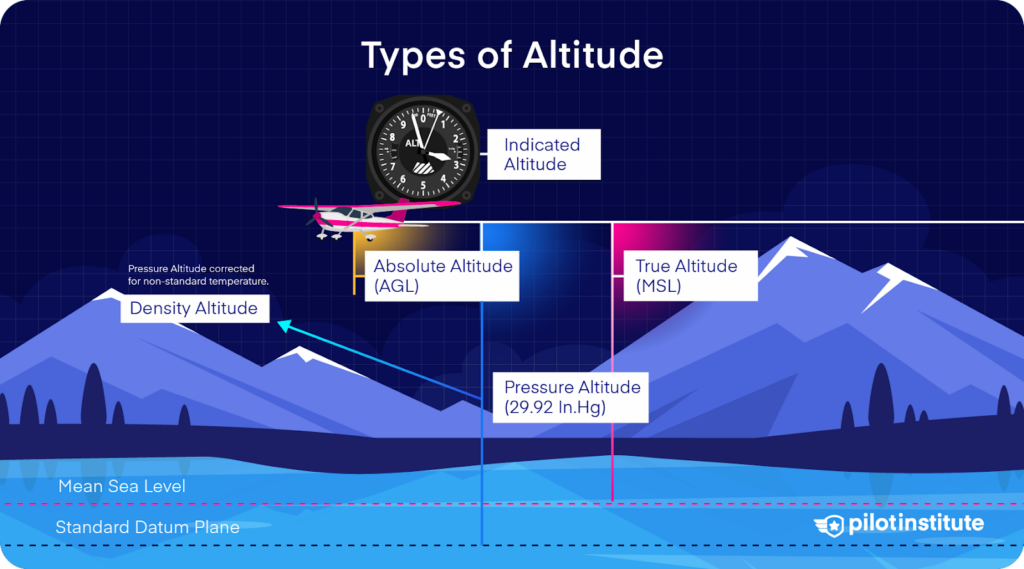
There are actually 5 types of altitude used in aviation. Altitude can be simply defined as the vertical distance between an object and a reference point.
True Altitude
True altitude refers to the height of the aircraft above sea level, using an average value for sea level.
Indicated Altitude
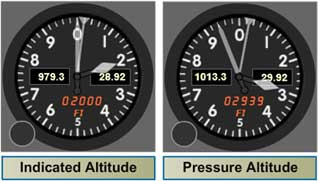
Indicated altitude is simply the measurement indicated on the altimeter (device for measuring altitude) This altitude is calculated in a number of ways, they include measurements from the atmospheric pressure, radar and lasers.
Pressure Altitude
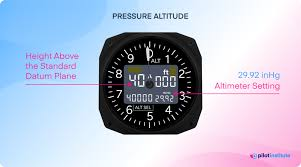
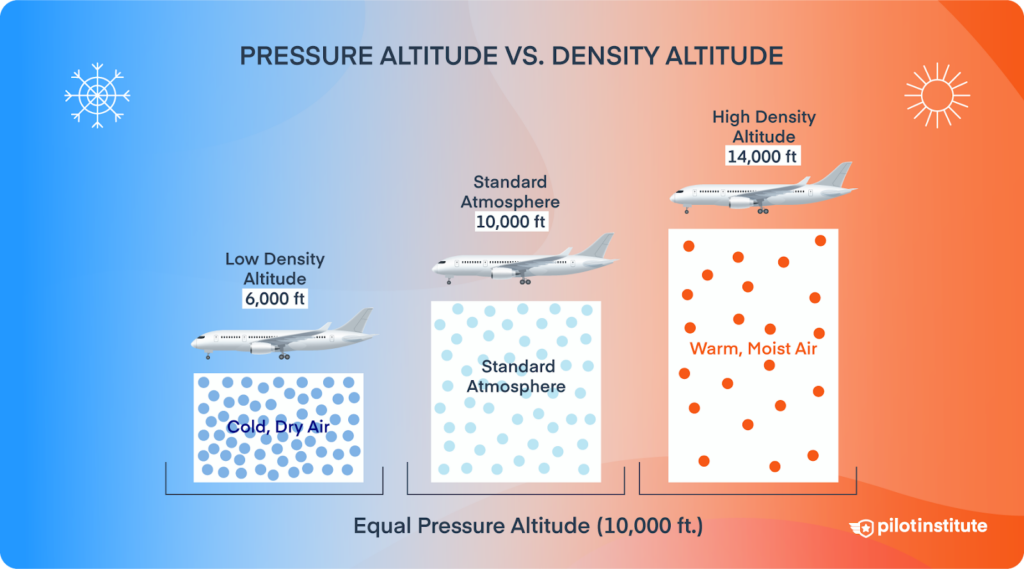
Pressure altitude is a measurement of the aircraft’s altitude above a standard datum plane, and is indicated by setting the altimeter to 29.92. For pilots flying at an altitude above 18,000 feet, setting the altimeter to 29.92 is required to establish a standard for the aircraft. Pressure altitude is also used in many flight planning calculations, including determining takeoff and landing distances.
Density Altitude
Density altitude is pressure altitude corrected for nonstandard temperature conditions, which include pressure, humidity, and temperature that’s outside the norm. Density altitude decreases in colder weather when the air is more dense, helping to give the aircraft’s wings more lift and enabling the engine to generate more power. In warmer weather or higher elevations, air density decreases. This causes density altitude to increase and may impair the aircraft’s performance. Air that is less dense may result in reduced propeller efficiency and as a result, reduced thrust.
Absolute Altitude
Absolute altitude refers to the actual distance the aircraft is flying above the current ground level. This distance will usually be found using a radar altimeter.
Barometric Altimeters
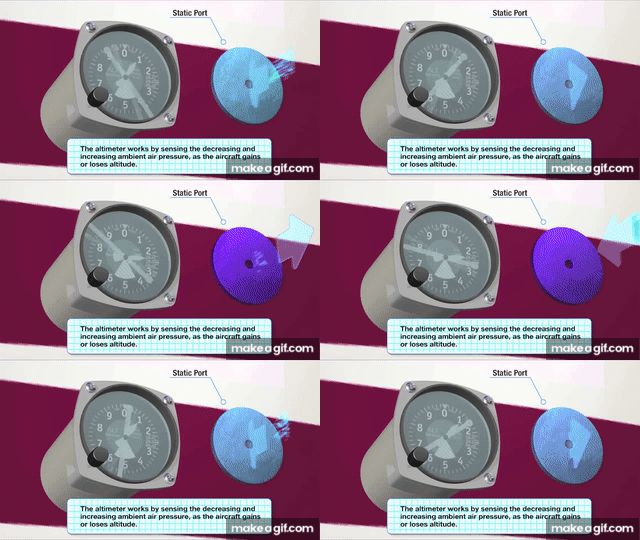
Altitude can be calculated by comparing the atmospheric pressure at the current height with the pressure at sea level. In general terms, the greater the altitude the lower the pressure. However, air pressure is affected not only by altitude; air pressure may also fluctuate due to changes in the weather which may cause changes in both pressure and temperature. These variables must be taken into account in order to obtain an accurate reading from a barometric altimeter.
Radio Altimeters
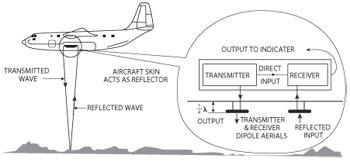
Radio Altimeters are based on the principle of reflection of electromagnetic wave pulses by the surface of the earth or sea. These waves fall within the radio spectrum range. Electromagnetic waves travel at the speed of light and thus the calculation of the distance is effectively immediate by using the time taken to send and receive the signals. Although they are affected by surface irregularities generating deviations in the radio signal, radio altimeters provide a reliable and accurate method of measuring height.
Laser Altimeters
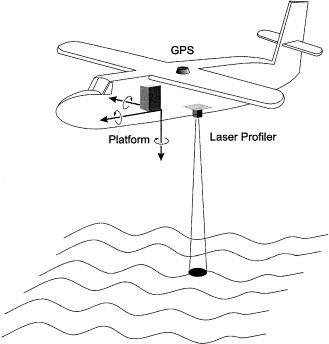
This type of altimeter works by using electromagnetic waves within the visible range of the spectrum instead of radio waves. Laser altimeters work in a similar way to radio altimeters. Again, the time taken for the emitted signal to travel from the transmitter to the surface and back again is measured. Once reflected, the beam of light is received and collected using a series of mirrors and lenses which focus the beam onto a photocell detector which is sensitive to infrared light.
Interested in our Aerospace Engineering Courses?
At iLearn Engineering®, we offer a diverse range of online accredited aerospace engineering courses and qualifications to cater to different academic and career goals. Our aerospace courses are available in varying credit values and levels, ranging from 40 credit Engineering Diplomas to a Bachelor’s equivalent 360 credit International Graduate Diploma.
All Aerospace Engineering Courses
All Aerospace Engineering Diploma Courses can be seen here.
Short Aerospace Courses (40 Credits)
- Diploma in Aerospace Engineering
- Diploma in Aircraft Design
- Diploma in Principles of Flight
- Diploma in Aerospace Structures
- Diploma in Aerodynamics
- Diploma in Aerodynamics, Propulsion and Space
First Year of Undergraduate (Level 4 – 120 Credits)
Higher International Certificate in Aerospace Engineering
Years One and Two of Undergraduate (Level 5 – 240 Credits)
Higher International Diploma in Aerospace Engineering
Degree Equivalent International Graduate Diploma (Level 6 – 360 Credits)
International Graduate Diploma in Aerospace Engineering
Complete Engineering Course Catalogue (all courses)
Alternatively, you can view all our online engineering courses here.
Recent Posts
Why a Headwind Reduces Take-Off Distance: The Airspeed–Groundspeed Derivation
Why a Headwind Reduces Take-Off Distance: The Airspeed–Groundspeed Derivation Aeroplanes normally take off into wind because the wing must reach a required airspeed to produce lift, whereas the runway distance is travelled at groundspeed. A headwind contributes to the airspeed before the aircraft has covered any runway. It therefore reduces the groundspeed required at lift-off […]
How to Calculate Aircraft Take-Off Ground Run: A Flight Mechanics Tutorial
How to Calculate Aircraft Take-Off Ground Run: A Flight Mechanics Tutorial An aircraft does not become airborne simply because its engines are producing thrust. During the take-off ground run, thrust must overcome aerodynamic drag and rolling resistance. On a sloping runway, it must also overcome a component of the aircraft’s weight. This tutorial derives a […]
Types of Aircraft Drag Explained: Induced, Profile and Interference Drag
Types of Aircraft Drag Explained: Induced, Profile and Interference Drag An aircraft experiences several forms of aerodynamic drag at the same time. Some result from generating lift, some arise as air flows over the aircraft’s surfaces, and others are created when airflow around neighbouring components interacts. For a conventional aircraft in subsonic flight, total drag […]