

What is the difference between Torque and Power ?
In engineering, torque and power are fundamental concepts that play a critical role in the design, analysis, and operation of mechanical systems.
Torque
Torque is a measure of the rotational force applied to an object. It determines how much force is acting on an object to make it rotate around an axis.
Torque(τ) = Force(F) × Distance(r)
Where:
r is the perpendicular distance from the axis of rotation
F is the force applied
Units: Newton-meter (Nm) in SI units
In a car engine, torque reflects how much twisting force the engine can produce. It influences acceleration, especially from a standstill.
Power
Power is the rate at which work is done or energy is transferred over time. In mechanical systems, it’s a combination of torque and rotational speed.
Power = Energy / Time
Power = 2π × RPM × Torque / 60
Or in SI units:
P = τ ⋅ ω
Where:
P = Power (Watts)
τ = Torque (Nm)
ω = Angular velocity (radians/sec)
Units: Watt (W) in SI units
Often expressed in kilowatts (kW) or horsepower (HP) in automotive engineering
In the same car engine, power determines the top speed and overall performance. A car with higher power can maintain high speeds and perform better under load
| Aspect | Torque | Power |
| What it measures | Rotational force | Rate of doing work |
| Affects | Acceleration, pulling power | Top speed, sustained performance |
| Units | Newton-meter (Nm) | Watt (W), Horsepower (HP) |
| Depends on | Force and lever arm | Torque and rotational speed (RPM) |
Analogy
Imagine riding a bicycle:
Torque is how hard you push the pedals.
Power is how quickly you’re able to go as a result of how hard and how fast you pedal.
Examples
Automotive Engineering
Torque

This allows it to tow heavy loads and climb steep gradients easily. For instance, a truck engine producing 800 Nm of torque at 2,000 RPM can haul a trailer with ease.
Torque is crucial for initial acceleration and pulling force.
Power

A sports car like a Ferrari may generate 500+ horsepower (about 373 kW).
This enables it to reach high top speeds and accelerate quickly even at higher RPMs.
Power dictates how fast the car can sustain high speeds or overtake on a highway.
Industrial Machinery
Torque

Hydraulic presses or industrial cranes need high torque to lift heavy materials.
High torque motors ensure strong, steady force without needing high rotational speed.
Power
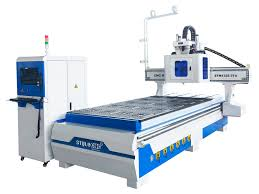
CNC machines (Computer Numerical Control) use high-power motors to rapidly drill, cut, or shape materials.
High power allows for fast and efficient material removal over time
Wind Turbines
Torque
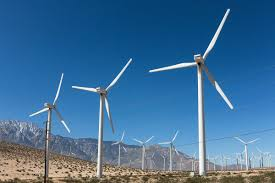
The blades of a wind turbine experience high torque due to wind acting at a large radius.
This torque turns the shaft connected to a generator.
Power
A large turbine might produce 2 megawatts (MW) of electrical power.
Impact: This amount of power can supply electricity to hundreds of homes
Construction Equipment
Torque
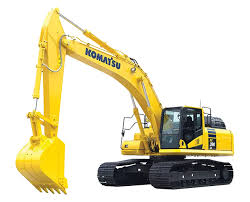
Excavators and bulldozers use hydraulic systems that deliver massive torque.
These machines can dig, lift, or push heavy earth and rubble without needing speed.
Power

Concrete mixers and pumps need high power to mix and pump concrete continuously.
Allows them to operate at high throughput for large-scale projects.
Aerospace Applications
Torque

In aircraft, actuators that move control surfaces (like flaps or rudders) apply torque.
Ensures precise aerodynamic control during flight.
Power
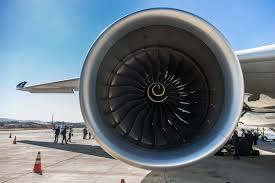
A jet engine might produce 100,000 horsepower.
That power propels the plane forward, overcoming drag and gravity to enable flight.
Interested in our engineering courses?
We have over 70 courses across all major engineering disciplines, including, mechanical, electrical and electronic, civil, aerospace, industrial, computer and general engineering. Visit our course catalogue for a complete list of fully accredited engineering programmes.
A small selection of short courses …
Diploma in Mechanical Engineering
Diploma in Structural Engineering
Level 6 Courses
International Graduate Diploma in Mechanical Engineering
International Graduate Diploma in Civil Engineering
International Graduate Diploma in Aerospace Engineering
Level 5 Courses
Higher International Diploma in Mechanical Engineering
Higher International Diploma in Civil Engineering
Higher International Diploma in Aerospace Engineering
Level 4 Courses
Higher International Certificate in Mechanical Engineering
Higher International Certificate in Civil Engineering
Higher International Certificate in Aerospace Engineering
Alternatively, you can view all our online engineering courses here.
Recent Posts
Why a Headwind Reduces Take-Off Distance: The Airspeed–Groundspeed Derivation
Why a Headwind Reduces Take-Off Distance: The Airspeed–Groundspeed Derivation Aeroplanes normally take off into wind because the wing must reach a required airspeed to produce lift, whereas the runway distance is travelled at groundspeed. A headwind contributes to the airspeed before the aircraft has covered any runway. It therefore reduces the groundspeed required at lift-off […]
How to Calculate Aircraft Take-Off Ground Run: A Flight Mechanics Tutorial
How to Calculate Aircraft Take-Off Ground Run: A Flight Mechanics Tutorial An aircraft does not become airborne simply because its engines are producing thrust. During the take-off ground run, thrust must overcome aerodynamic drag and rolling resistance. On a sloping runway, it must also overcome a component of the aircraft’s weight. This tutorial derives a […]
Types of Aircraft Drag Explained: Induced, Profile and Interference Drag
Types of Aircraft Drag Explained: Induced, Profile and Interference Drag An aircraft experiences several forms of aerodynamic drag at the same time. Some result from generating lift, some arise as air flows over the aircraft’s surfaces, and others are created when airflow around neighbouring components interacts. For a conventional aircraft in subsonic flight, total drag […]