

Compliance & Protection: CE Marking, Patents, and Copyright for Engineers
Introduction
Getting a product “working” is only half the job, getting it legally market-ready and properly protected is the other half. This guide walks engineers through the essentials of regulatory compliance (including CE marking) and the core IP tools, patents and copyright, so you can reduce risk, avoid rework, and ship with confidence.
Regulations
Regulations differ from Standards in that they are enforceable by law. When you work in any field of engineering, you should be aware what regulations cover that area, as failing to adhere to any relevant regulations would be breaking the law.
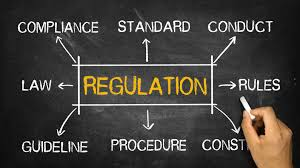
Some of the most common Regulations that you will come across as an engineer are shown below, with a brief summary. You should click each link to read more about them:
The Management of Health and Safety at Work Regulations 1999
The main employer duties under these regulations include:
- making ‘assessments of risk’ to the health and safety of its workforce, and to act upon risks they identify, so as to reduce them
- appointing competent persons to oversee workplace health and safety;
- providing workers with information and training on occupational health and safety; and
- operating a written health and safety policy
The Workplace (Health, Safety and Welfare) Regulations 1992
The main provisions of these Regulations require employers to provide:
- Adequate lighting, heating, ventilation and workspace (and keep them in a clean condition);
- Staff facilities, including toilets, washing facilities and refreshment; and
- Safe passageways, i.e. to prevent slipping and tripping hazards
The Personal Protective Equipment at Work Regulations 1992
The main provisions require employers to:
- Ensure that suitable personal protective equipment (PPE) is provided free of charge “wherever there are risks to health and safety that cannot be adequately controlled in other ways.”
- Provide information, training and instruction on the use of this equipment.
The Manual Handling Operations Regulations 1992
The main provisions of these Regulations require employers to:
- Avoid (so far as is reasonably practicable) the need for employees to undertake any manual handling activities involving risk of injury;
- Make assessments of manual handling risks, and try to reduce the risk of injury. The assessment should consider the task, the load and the individual’s personal characteristics (physical strength, etc.); and
- Provide workers with information on the weight of each load.
The Provision and Use of Work Equipment Regulations 1998(PUWER)
The main provisions require employers to:
- Ensure the safety and suitability of work equipment for the purpose for which it is provided;
- Properly maintain the equipment, irrespective of how old it is;
- Provide information, instruction and training on the use of equipment; and
- Protect employees from dangerous parts of machinery.
The Health and Safety (Display Screen Equipment) Regulations 1992
Employers are required to:
make a risk assessment of workstation use by Display Screen Equipment (DSE) users, and reduce the risks identified;
- ensure DSE users take ‘adequate breaks’;
- provide regular eyesight tests;
- provide health and safety information;
- provide adjustable furniture (e.g. desk, chair, etc.); and
- demonstrate that they have adequate procedures designed to reduce risks associated with DSE work, such as repetitive strain injury (RSI).
CE Marking

CE marking is a certification mark that indicates conformity with health, safety, and environmental protection standards for products sold within the European Economic Area (EEA).
The CE marking is also found on products sold outside the EEA that have been manufactured to EEA standards. This makes the CE marking recognizable worldwide even to people who are not familiar with the European Economic Area.
The CE marking is the manufacturer’s declaration that the product meets EU standards for health, safety, and environmental protection.
The CE marking is required for many products. It:
- shows that the manufacturer has checked that these products meet EU safety, health or environmental requirements
- is an indicator of a product’s compliance with EU legislation
- allows the free movement of products within the European market
Patents
As a design engineer, the nature of your work means you may be innovating new ideas or products. As such, it’s important that you know how to protect your work. This is where Patents can be used.
Let’s imagine you create a new invention, and you start to manufacture it and enter the market. You run the risk of spending the money to start production, only to find your competition has copied your invention!
Instead, if you apply and achieve a patent against your product then you have protection in law against somebody copying your idea (within the scope of the patent). This means your competition cannot make, sell, or import any products that fall within the scope of your patent.
One very important point to remember – you need to apply for the patent, before it enters the public domain. In simple words, you need to keep your invention secret until after you have applied for the patent. By public domain that means “available to the public”, so it is perfectly acceptable to discuss ideas within your organisation, or between a small team of engineers working on the product. However, if your idea is shared on the internet, enters the marketplace, or is generally considered to be available to the public, then you can no longer apply for a patent. So be very careful with who, and how, you share information on a new invention before your patent application is completed.
As per the UK government guidelines, in order to achieve a patent, an invention must achieve all of the below requirements. It must be:
- Something that can be made or used
- new
- inventive (i.e. not just a simple modification to something that already exists)
However, not all things can be patented, even if they achieve the points above. Some things are specifically excluded from patent protection. Below is a list of things that cannot be patented for example (as per UK government guidelines):
- Literary, dramatic, musical or artistic works
- A way of doing business, playing a game or thinking
- A method of medical treatment or diagnosis
- A discovery, scientific theory or mathematical method
- The way information is presented
- Some computer programs or mobile apps
- ‘Essentially biological’ processes like crossing-breeding plants, and plant or animal varieties
Although the above can not be protected by patent, there are still other means to protect your work, such as Copyright.
As an engineer, it is important that you are aware of patents, both as a way of protecting your work, but also to avoid legal conflicts should you work overlap with that of somebody else.
Interested in our Mechanical and Aerospace Engineering Courses?
At iLearn Engineering®, we offer a diverse range of online accredited engineering courses and qualifications to cater to different academic and career goals. Our engineering courses are available in varying credit values and levels, ranging from 40 credit Engineering Diplomas to a 360 credit International Graduate Diploma.
All Mechanical and Aerospace Engineering Courses
All Mechanical Engineering Diploma Courses are here.
All Aerospace Engineering Diploma Courses are here.
Short Courses (40 Credits)
A selection of our more popular 40 credit mechanical and aerospace engineering diplomas…
Diploma in Mechanical Engineering
Diploma in Aerospace Engineering
First Year of Undergraduate (Level 4 – 120 Credits)
Higher International Certificate in Engineering
Higher International Certificate in Mechanical Engineering
Higher International Certificate in Aerospace Engineering
First Two Years of Undergraduate (Level 5 – 240 Credits)
Higher International Diploma in Engineering
Higher International Diploma in Mechanical Engineering
Higher International Diploma in Aerospace Engineering
Degree Equivalent International Graduate Diploma (Level 6 – 360 Credits)
International Graduate Diploma in Engineering
International Graduate Diploma in Mechanical Engineering
International Graduate Diploma in Aerospace Engineering
Complete Engineering Course Catalogue (all courses)
Alternatively, you can view all our online engineering courses here.
Recent Posts
Why a Headwind Reduces Take-Off Distance: The Airspeed–Groundspeed Derivation
Why a Headwind Reduces Take-Off Distance: The Airspeed–Groundspeed Derivation Aeroplanes normally take off into wind because the wing must reach a required airspeed to produce lift, whereas the runway distance is travelled at groundspeed. A headwind contributes to the airspeed before the aircraft has covered any runway. It therefore reduces the groundspeed required at lift-off […]
How to Calculate Aircraft Take-Off Ground Run: A Flight Mechanics Tutorial
How to Calculate Aircraft Take-Off Ground Run: A Flight Mechanics Tutorial An aircraft does not become airborne simply because its engines are producing thrust. During the take-off ground run, thrust must overcome aerodynamic drag and rolling resistance. On a sloping runway, it must also overcome a component of the aircraft’s weight. This tutorial derives a […]
Types of Aircraft Drag Explained: Induced, Profile and Interference Drag
Types of Aircraft Drag Explained: Induced, Profile and Interference Drag An aircraft experiences several forms of aerodynamic drag at the same time. Some result from generating lift, some arise as air flows over the aircraft’s surfaces, and others are created when airflow around neighbouring components interacts. For a conventional aircraft in subsonic flight, total drag […]