

Engineering Courses: How to Choose the Right Route for Your Career
Introduction
Choosing an engineering course can feel like standing at the beginning of several different roads, each leading towards a different kind of future. One route may lead into mechanical systems and manufacturing. Another may lead towards aircraft, infrastructure, electronics, computing, renewable energy or engineering management. For many learners, the challenge is not deciding whether engineering is the right field, but deciding which type of engineering course will best support their goals.
Why Choosing the Right Engineering Course Matters

iLearn Engineering® offers a wide range of online engineering courses designed for learners who want flexibility, recognised qualifications and a clear route through different levels of engineering study. Rather than offering a single pathway, iLearn Engineering® provides options across several major engineering disciplines, allowing learners to choose a course based on their interests, current experience and future ambitions.
The range includes Mechanical Engineering, Electrical and Electronic Engineering, Civil Engineering, Aerospace Engineering, Industrial Engineering, Computer Engineering, General Engineering and Engineering Management. Each area has its own focus, but all are built around the same wider purpose: helping learners develop the knowledge needed to understand and solve engineering problems.
What Is Engineering, Really?
Engineering is one of the most practical and career-focused fields of study. At its heart, engineering is about solving real-world problems using science, mathematics, technology and creative thinking. Engineers design, build, test and improve the systems, structures, machines and technologies that people rely on every day.
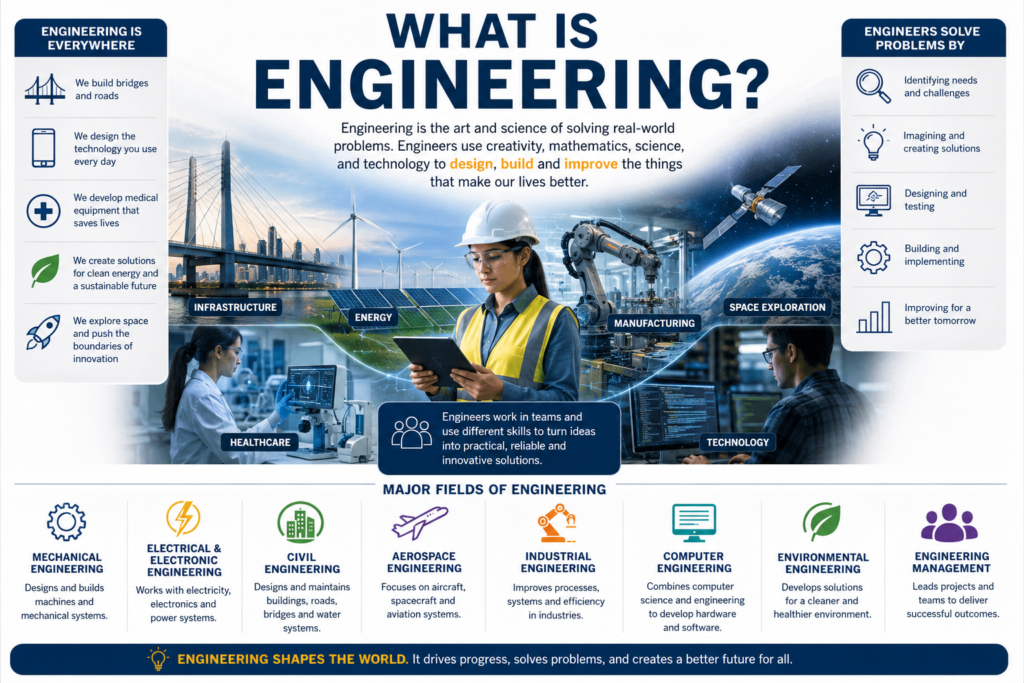
From bridges, roads and buildings to renewable energy systems, manufacturing equipment, transport networks, software platforms and artificial intelligence, engineering plays a central role in modern life. Almost every industry depends on engineering knowledge in some way, which is why engineering courses can be such a strong choice for learners who want to develop useful, transferable and career-relevant skills.
Studying engineering is not simply about learning formulas or technical theory. Good engineering courses help learners understand how to apply knowledge in practical situations. This means developing problem-solving skills, analytical thinking, technical awareness and the ability to approach challenges in a structured and logical way.
Engineering is also a creative subject. Engineers often have to design new solutions, improve existing systems or find better ways to use materials, energy, time and resources. Whether the goal is to make a process more efficient, reduce environmental impact, improve safety or create new technology, engineers are constantly looking for ways to make things work better.
There are many different areas of engineering, including civil engineering, mechanical engineering, electrical and electronic engineering, chemical engineering, software engineering, aerospace engineering and environmental engineering. Each branch focuses on different types of problems, but they all share the same purpose: applying technical knowledge to create practical solutions.
For anyone thinking about their future career, engineering courses can open the door to a wide range of opportunities. Engineering skills are valued in construction, energy, manufacturing, transport, technology, design, project management and many other sectors. Even if you are not yet sure which engineering career path is right for you, studying engineering can help you build a strong foundation for future progression.
This is why engineering remains such a respected and in-demand area of study. It combines technical knowledge with practical problem-solving and gives learners the confidence to understand how things work, how they can be improved and how they can contribute to projects that make a real difference.
Engineering Courses
iLearn Engineering® currently offers courses across the following engineering disciplines and qualification levels.
Higher International Certificates (EduQual Level 4)
Higher International Certificate EduQual Level 4 qualifications are internationally recognised higher education awards aligned with Level 4 of the UK Framework for Higher Education Qualifications (FHEQ). They are academically comparable to the first year of a bachelor’s degree and are designed to provide learners with a strong foundation in engineering principles, mathematics, science and discipline-specific knowledge.
- Higher International Certificate in Engineering
- Higher International Certificate in Mechanical Engineering
- Higher International Certificate in Electrical and Electronic Engineering
- Higher International Certificate in Aerospace Engineering
- Higher International Certificate in Industrial Engineering
- Higher International Certificate in Civil Engineering
- Higher International Certificate in Computer Engineering
Higher International Diplomas (EduQual Level 5)
Higher International Diploma EduQual Level 5 qualifications are internationally recognised higher education awards aligned with Level 5 of the UK Framework for Higher Education Qualifications (FHEQ). They are academically comparable to the second year of a bachelor’s degree or a Higher National Diploma (HND) and build upon the knowledge gained at Level 4. Level 5 study develops more advanced technical knowledge, analytical thinking and problem-solving skills, while introducing learners to areas such as project management, research and specialist engineering subjects.
- Higher International Diploma in Engineering
- Higher International Diploma in Mechanical Engineering
- Higher International Diploma in Electrical and Electronic Engineering
- Higher International Diploma in Aerospace Engineering
- Higher International Diploma in Industrial Engineering
- Higher International Diploma in Civil Engineering
- Higher International Diploma in Computer Engineering
International Graduate Diplomas (Level 6)
International Graduate Diploma (Level 6) qualifications are advanced higher education awards aligned with Level 6 of the UK Framework for Higher Education Qualifications (FHEQ). They are academically comparable to the final year of a bachelor’s degree and build upon the knowledge and skills developed at Levels 4 and 5. Level 6 study focuses on advanced engineering concepts, critical analysis, innovation and professional practice, enabling learners to solve complex engineering problems and evaluate engineering solutions. These qualifications provide a recognised pathway to postgraduate study and support progression into graduate-level and senior engineering roles.
- International Graduate Diploma in Engineering
- International Graduate Diploma in Mechanical Engineering
- International Graduate Diploma in Electrical and Electronic Engineering
- International Graduate Diploma in Aerospace Engineering
- International Graduate Diploma in Civil Engineering
- International Graduate Diploma in Engineering Management
A sample of the Engineering Diplomas (40-credit CPD qualifications)
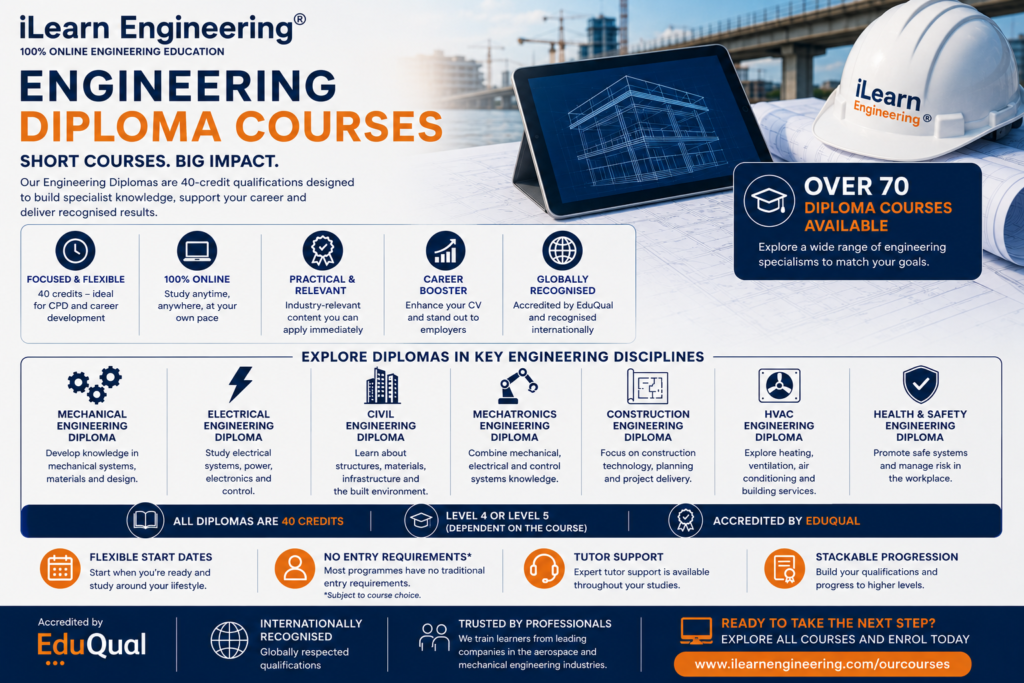
Overall, iLearn Engineering offers qualifications in Mechanical, Electrical and Electronic, Civil, Aerospace, Industrial, Computer, General Engineering and Engineering Management, with over 70 online engineering courses available. Some of the most common engineering branches include:
- Civil Engineering (infrastructure, roads, buildings)
- Mechanical Engineering (machines, manufacturing)
- Electrical Engineering (power systems, electronics)
- Computer Engineering (systems, AI)
- Aerospace Engineering
- Industrial Engineering (Manufacturing)
Each path leads to very different careers, so your choice matters.
Discover Your Interests
For someone interested in how machines work, Mechanical Engineering may be a natural choice. For learners drawn to power, electronics and modern control systems, Electrical and Electronic Engineering may be more suitable. Those interested in buildings, infrastructure and the built environment may look towards Civil Engineering, while learners fascinated by aircraft and flight may prefer Aerospace Engineering. Computer Engineering may appeal to those interested in programming, digital systems, cyber security, cloud computing or artificial intelligence.
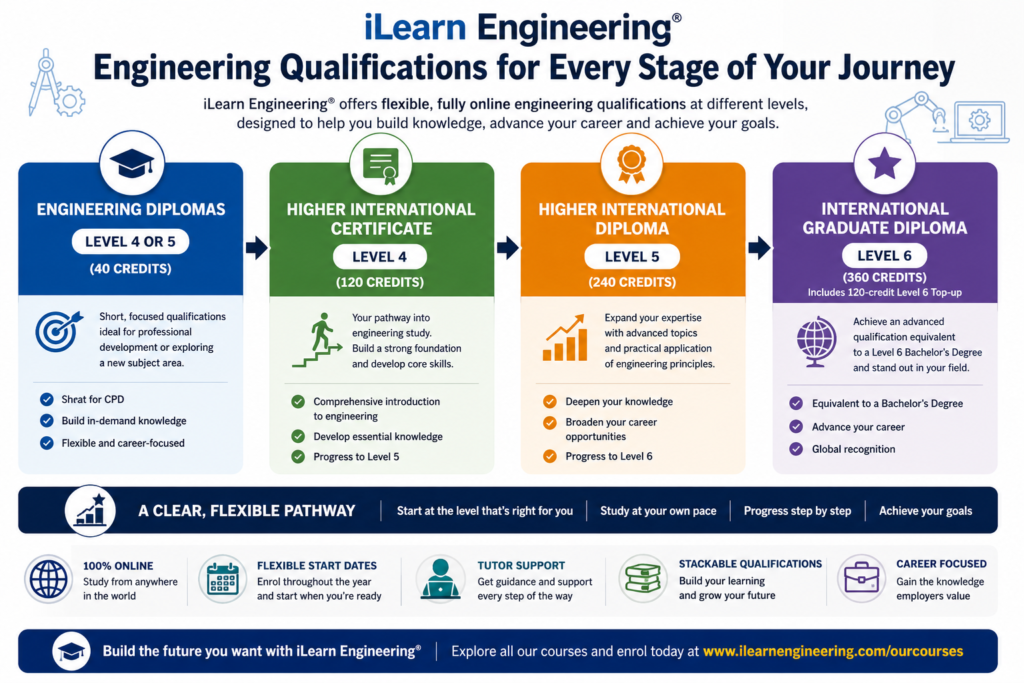
iLearn Engineering® also offers courses at different qualification levels. Shorter Engineering Diplomas are available for learners who want to study a focused subject area, often for professional development or to explore a new field. Higher International Certificates provide a Level 4 route into engineering study, while Higher International Diplomas extend this to Level 5. For learners seeking a more advanced qualification, International Graduate Diplomas provide a Level 6 pathway.
This structure allows learners to think carefully about where they are now and where they want to go next. Some may begin with a shorter Diploma to build confidence in a specific subject. Others may choose a Higher International Certificate as a broader foundation. Learners aiming for a more comprehensive route may progress through the Higher International Diploma or International Graduate Diploma.
One of the advantages of this approach is that learners are not limited to one narrow route. iLearn Engineering® offers courses in both traditional and emerging areas of engineering, including Renewable Energy, Artificial Intelligence, Cyber Security, Electric Vehicle Technology, Building Information Modelling, Environmental Engineering, Instrumentation and Control, Telecommunications, Water Engineering, Aerodynamics and Composites, Smart Materials and Nanotechnology.
This reflects the changing nature of engineering itself. Modern engineers are increasingly working across digital systems, sustainable technologies, advanced materials and intelligent infrastructure. Choosing a course is therefore not only about selecting a subject for today, but also about preparing for the industries and technologies that are likely to shape the future.
When choosing between the courses available, learners should consider what genuinely interests them. A course is easier to stay committed to when the subject feels relevant and engaging. It is also useful to review the units within each course, as this gives a clearer idea of what will actually be studied. Course titles are helpful, but the individual units often provide the best insight into whether a programme is the right fit.
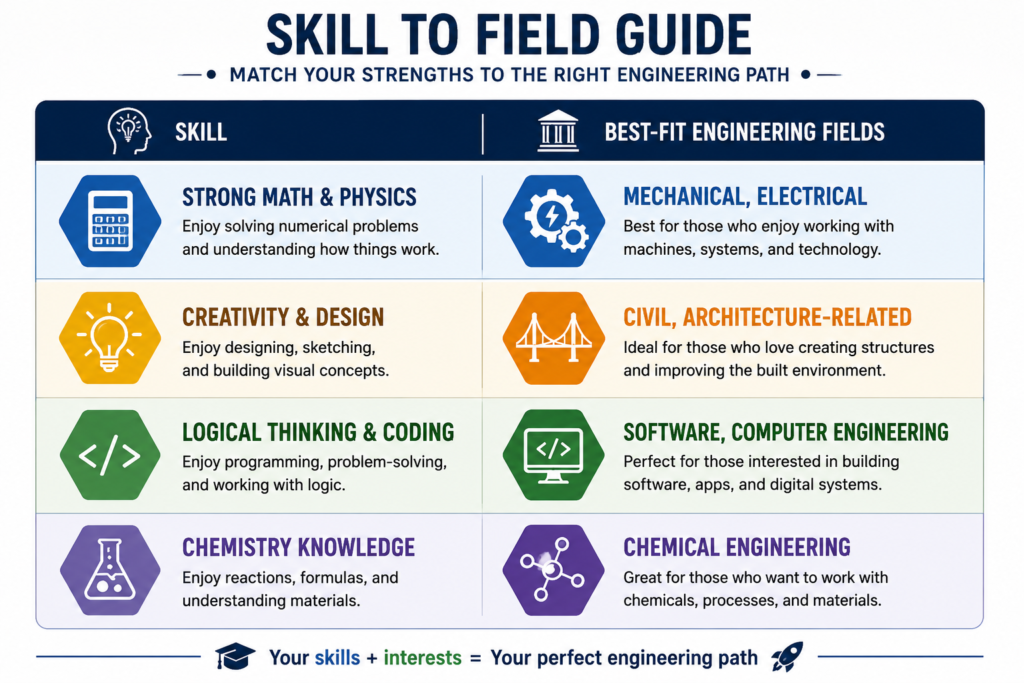
Know Your Strengths
Understanding your strengths is key to choosing the right field.

Learners may also want to consider their preferred study style. iLearn Engineering® is an online-only college, which means the courses are designed for distance learning. This can suit learners who are working, changing careers, studying internationally or managing other commitments alongside their education. The online format allows learners to study without needing to attend a physical campus.
Ultimately, choosing the right engineering course is about alignment. The course should match the learner’s interests, support their career direction and provide a suitable level of academic challenge. iLearn Engineering® offers a broad selection of engineering qualifications, giving learners the opportunity to compare different disciplines and choose a pathway that reflects their goals.
For anyone beginning their engineering journey, the most important step is to explore the options carefully. Look at the discipline. Review the course content. Consider the qualification level. Think about the type of work you may want to do in the future.
With a wide range of online engineering courses available, iLearn Engineering® provides a flexible route for learners who want to develop their engineering knowledge and progress through recognised qualifications at a pace that suits their circumstances.
Frequently Asked Questions
What engineering courses does iLearn Engineering® offer?
iLearn Engineering® offers more than 70 online engineering courses across a wide range of disciplines. Qualifications include Engineering Diplomas, Higher International Certificates (EduQual Level 4), Higher International Diplomas (EduQualLevel 5), and International Graduate Diplomas (Level 6). Courses are available in Mechanical Engineering, Electrical and Electronic Engineering, Civil Engineering, Aerospace Engineering, Industrial Engineering, Computer Engineering, General Engineering and Engineering Management, alongside specialist subjects such as Artificial Intelligence, Renewable Energy, Cyber Security and Electric Vehicle Technology.
Which engineering course is right for me?
The right course depends on your interests, career aspirations and previous experience. If you enjoy machinery and manufacturing, Mechanical Engineering may be a suitable choice. If you are interested in infrastructure and construction, Civil Engineering may be more appropriate. Learners interested in digital technologies may wish to explore Computer Engineering or specialist courses in Artificial Intelligence or Cyber Security.
Reviewing the course content and qualification pathways can help identify the programme that best aligns with your goals.
Can I study engineering online?
Yes. All iLearn Engineering® courses are delivered entirely online, allowing learners to study from almost anywhere while balancing education with work or personal commitments. Learning materials are available through the online learning platform, enabling students to progress at their own pace.
What qualification levels are available?
iLearn Engineering® offers qualifications at several levels:
- Engineering Diplomas (40 credits)
- Higher International Certificates (Level 4)
- Higher International Diplomas (Level 5)
- International Graduate Diplomas (Level 6)
These qualifications provide structured progression routes for learners wishing to continue their engineering education.
Do I need previous engineering experience?
Many iLearn Engineering® programmes are designed to be accessible to learners from a wide range of educational backgrounds. Depending on the qualification selected, previous engineering qualifications may not be required, allowing learners to begin developing engineering knowledge from an appropriate starting point.
Can I progress to higher qualifications?
Yes. Many learners choose to progress from a Higher International Certificate to a Higher International Diploma and then to an International Graduate Diploma. This staged approach allows learners to build knowledge and qualifications over time.
What engineering disciplines are available?
iLearn Engineering® currently offers qualifications across several major engineering disciplines, including:
- Mechanical Engineering
- Electrical and Electronic Engineering
- Civil Engineering
- Aerospace Engineering
- Industrial Engineering
- Computer Engineering
- General Engineering
- Engineering Management
In addition, learners can study specialist subjects including Renewable Energy, Artificial Intelligence, Cloud Computing, Building Information Modelling (BIM), Instrumentation and Control Engineering, Environmental Engineering, Telecommunications, Water Engineering, Composites, Smart Materials and Nanotechnology, and many others.
How are the courses assessed?
Assessment is based on coursework rather than traditional examinations. Learners complete assignments throughout their studies, allowing them to demonstrate their understanding of the course material as they progress.
Can I study while working full-time?
Many learners choose online engineering courses because they provide greater flexibility than traditional campus-based study. Since iLearn Engineering® courses are delivered online, learners can organise their studies around existing work and personal commitments.
How do I choose between a Diploma, Higher International Certificate, Higher International Diploma and International Graduate Diploma?
The most suitable qualification depends on your existing knowledge, career objectives and how much depth of study you are looking for. Some learners begin with a shorter Diploma to develop knowledge in a specific subject area, while others choose a Higher International Certificate or Higher International Diploma as part of a longer educational pathway. Learners seeking a Level 6 qualification may consider the International Graduate Diploma.
Are iLearn Engineering® qualifications recognised?
iLearn Engineering® qualifications are accredited and aligned with recognised qualification frameworks making them internationally respected and recognised. Prospective learners who require a qualification for a specific employer, university or professional body should always review the relevant entry or recognition requirements for their intended purpose.
How do I enrol?
Prospective learners can explore the full range of engineering courses, compare qualification pathways and enrol online through the iLearn Engineering® website. Reviewing the course descriptions and units of study before enrolling can help ensure that the chosen programme matches individual interests and career aspirations.
Recent Posts
Types of Aircraft Drag Explained: Induced, Profile and Interference Drag
Types of Aircraft Drag Explained: Induced, Profile and Interference Drag An aircraft experiences several forms of aerodynamic drag at the same time. Some result from generating lift, some arise as air flows over the aircraft’s surfaces, and others are created when airflow around neighbouring components interacts. For a conventional aircraft in subsonic flight, total drag […]
Induced Drag Explained: Why Flying Slower Can Increase Drag
Induced Drag Explained: Why Flying Slower Can Increase Drag Why can an aircraft experience more drag when it flies more slowly? We usually associate greater speed with greater air resistance, but a wing must also generate enough lift to support the aircraft. Induced drag is the drag associated with producing lift on a finite-span wing. […]
Laminar vs Turbulent Boundary Layers: Why Airflow Separates from Aircraft Wings
Laminar vs Turbulent Boundary Layers: Why Airflow Separates from Aircraft Wings Airflow around an aircraft wing is often shown as smooth streamlines passing neatly over the aerofoil. In reality, the thin layer of air immediately next to the wing surface behaves very differently from the undisturbed airflow further away. This region is called the boundary […]